First impressions matter
The right drape opening is more than function: it is remembered
There is a moment before every show begins: the house lights dim, and every eye turns to the curtain. That first movement - a glide, a sweep, a gather, a drop - sets the tone for everything that follows.
Choosing an opening style is about more than looks. It is about function, timing and impact, and about what the venue above the curtain can actually do. Whether you are working with a school hall, a proscenium theatre or a touring rig, this guide walks through the eight styles we cut, sew and fit drapes for: how each one moves, why it works, and where you will see it.
1. Traveller curtains
The reliable workhorse for everyday transitions
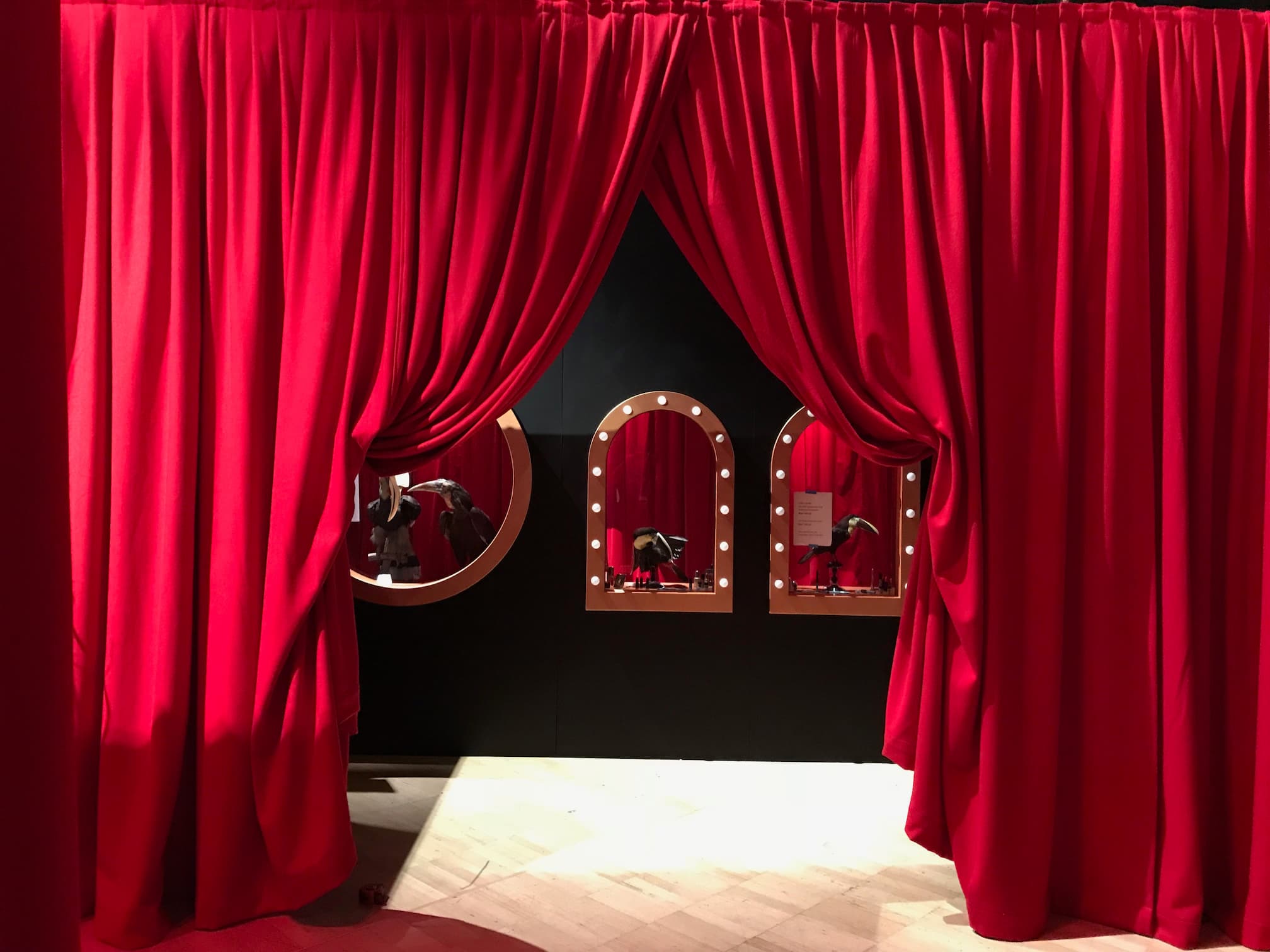
Also known as tabs or wipes, traveller curtains open from the centre and move horizontally along a track. They are sewn as two overlapping halves so the join never gapes, and they run by hand, on a cord line, or motorised. Of the eight styles here, this is the one our machinists cut most often: controlled scene changes without complex rigging.
Why it works
- Operates by hand, cord line or motor on tracks like Triple E UniTrack and Erail
- Handles quick changes and mid-show scene shifts
- Masks the backstage view with minimal fuss
Seen in: school theatres, multipurpose halls and small touring shows.
2. Guillotine curtains
Vertical motion for bold, dramatic moments
A guillotine curtain lifts straight up and comes straight in: one full-width piece flown on a bar. The reveal is immediate - no travel time across the stage, and no moving parts at stage level. It asks for fly height and repays it in split-second timing.
Why it works
- Instant full-stage reveal on a single cue
- Suits venues with limited wing space
- Nothing moves at stage level, so sightlines stay clean
Seen in: touring musicals, professional theatres and corporate keynotes that need fast transitions.
3. Tableau curtains
A fan-like sweep for graceful stage reveals
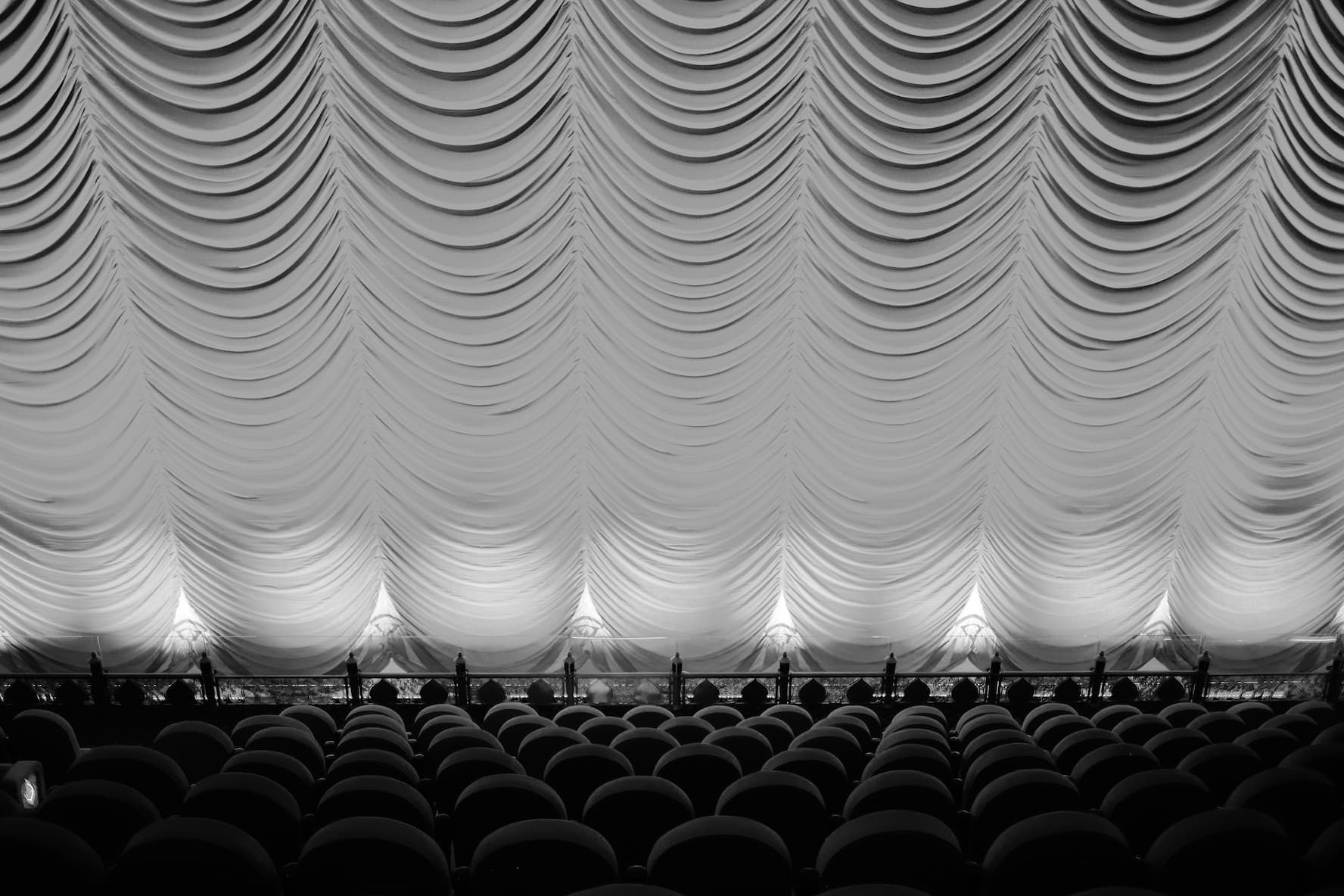
Tableau curtains, sometimes called butterfly tabs, draw up diagonally from the two top corners so the fabric sweeps open in a fan. The motion is stylised and romantic, which is why it keeps its place in visually driven storytelling. It runs by hand or motorised with pulley assists.
Why it works
- A refined, sweeping reveal with real presence
- Suits ceremonial and classical productions
- Works where vertical lift is limited
Seen in: ballet, opera and productions with stylised transitions.
4. Venetian curtains
Custom reveals with elegant stage control
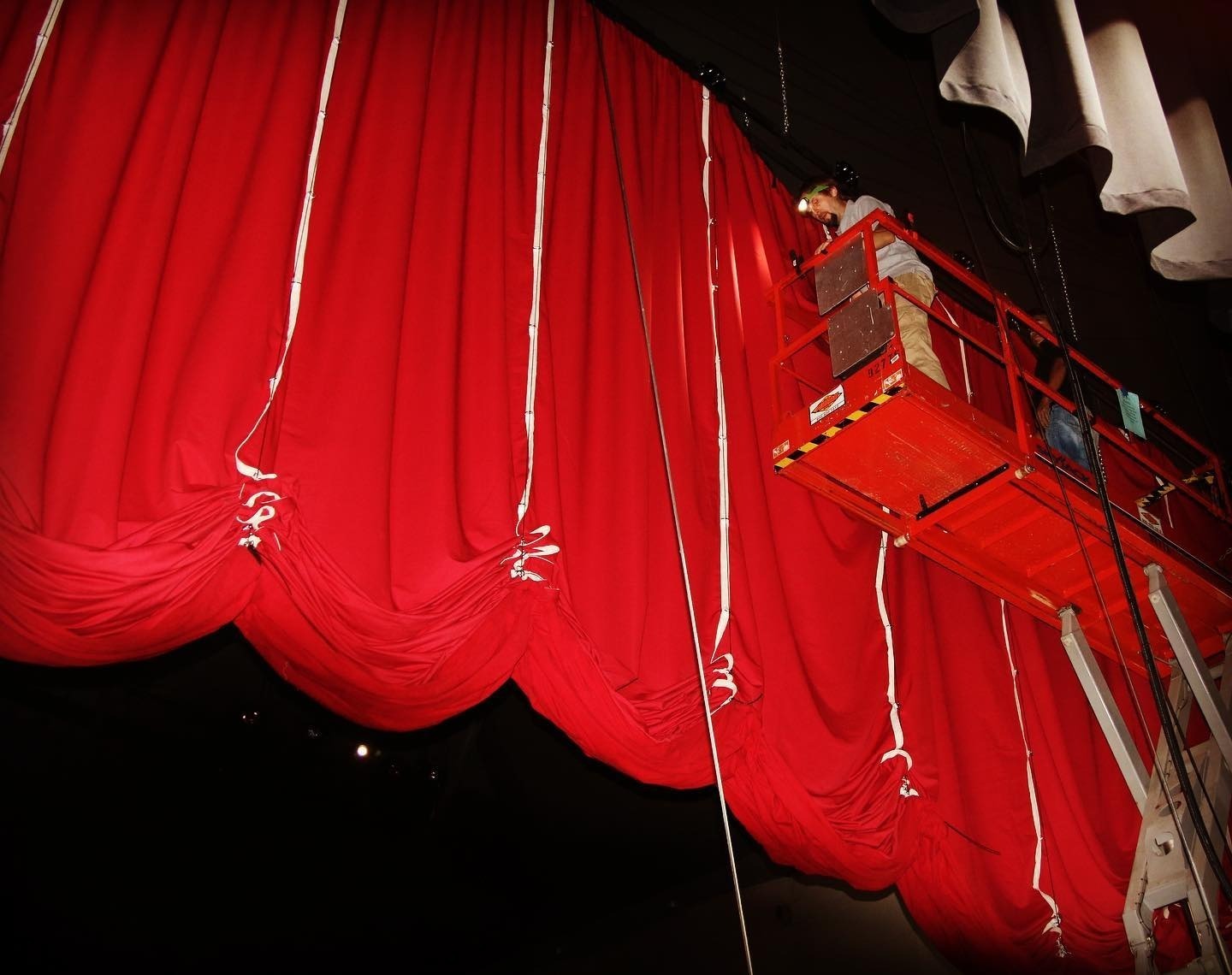
A venetian curtain gathers vertically on multiple lift lines, each section rising independently into scalloped swags. That independence is the point: reveal the full stage, or lift one section and hold the rest. Of all eight styles, it gives the most control over the shape of the opening.
Why it works
- Layered, staged openings from a single curtain
- Suits decorative backdrops and staggered reveals
- Reads as sophistication without extra scenery
Seen in: concert halls, gala events and productions with flexible reveal requirements.