
Fire treatment
Fire retardant treatment, for stage drapes
We treat stage drapes, backdrops and soft goods by immersion or spray, flame retarded to AS 1530 standards. Every job comes back with a treatment certificate for your insurance and audit file.
The Drape Selector
Spec your drape
before you call.
Answer five quick questions. The Drape Selector matches fabric, fullness and opening style to your space, then turns it into a spec ready to send to the makers.
- Five questions
- No email gate
- Quote-ready spec

The process
Five steps, every job
-
 01
Evaluate
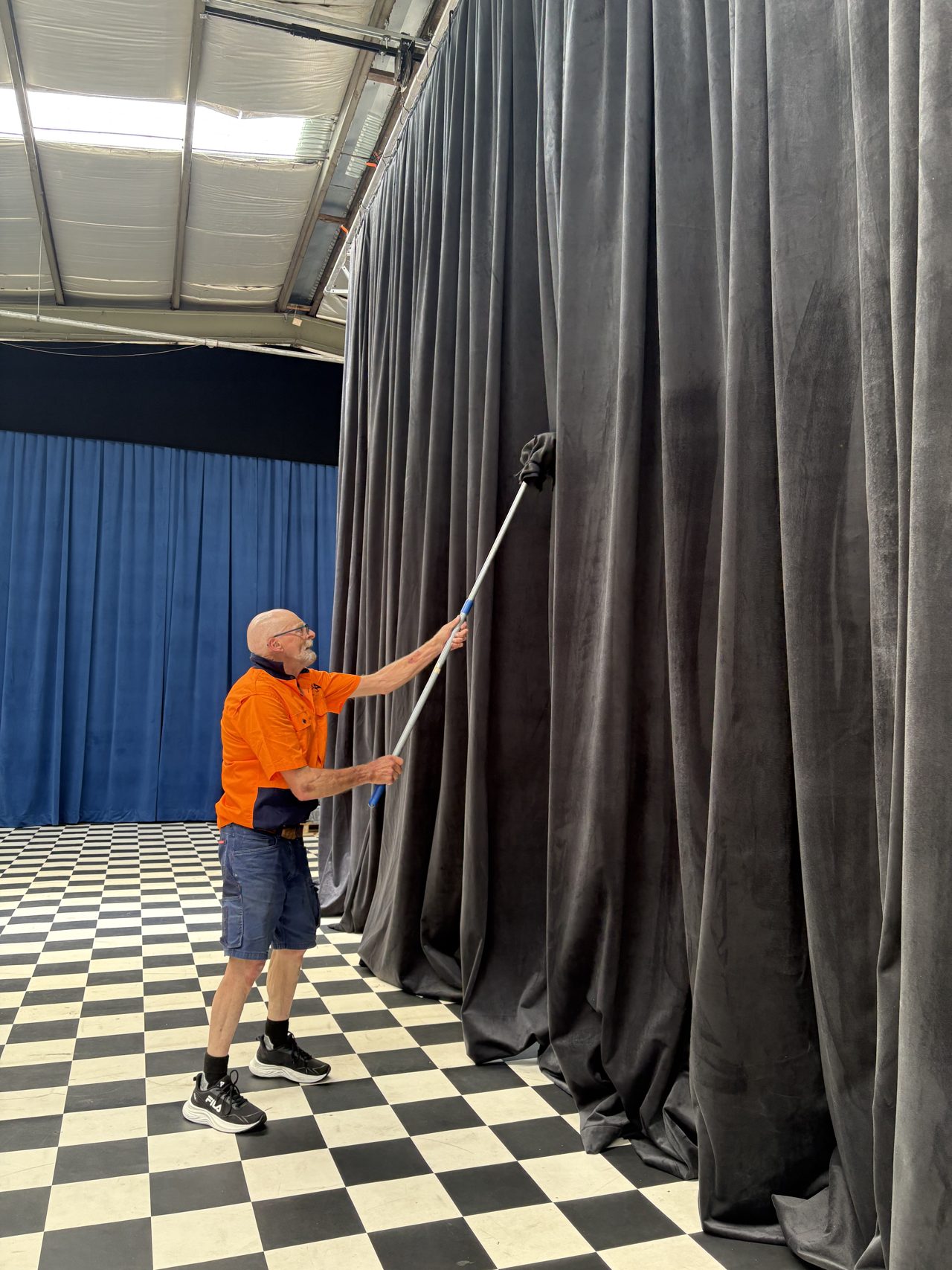
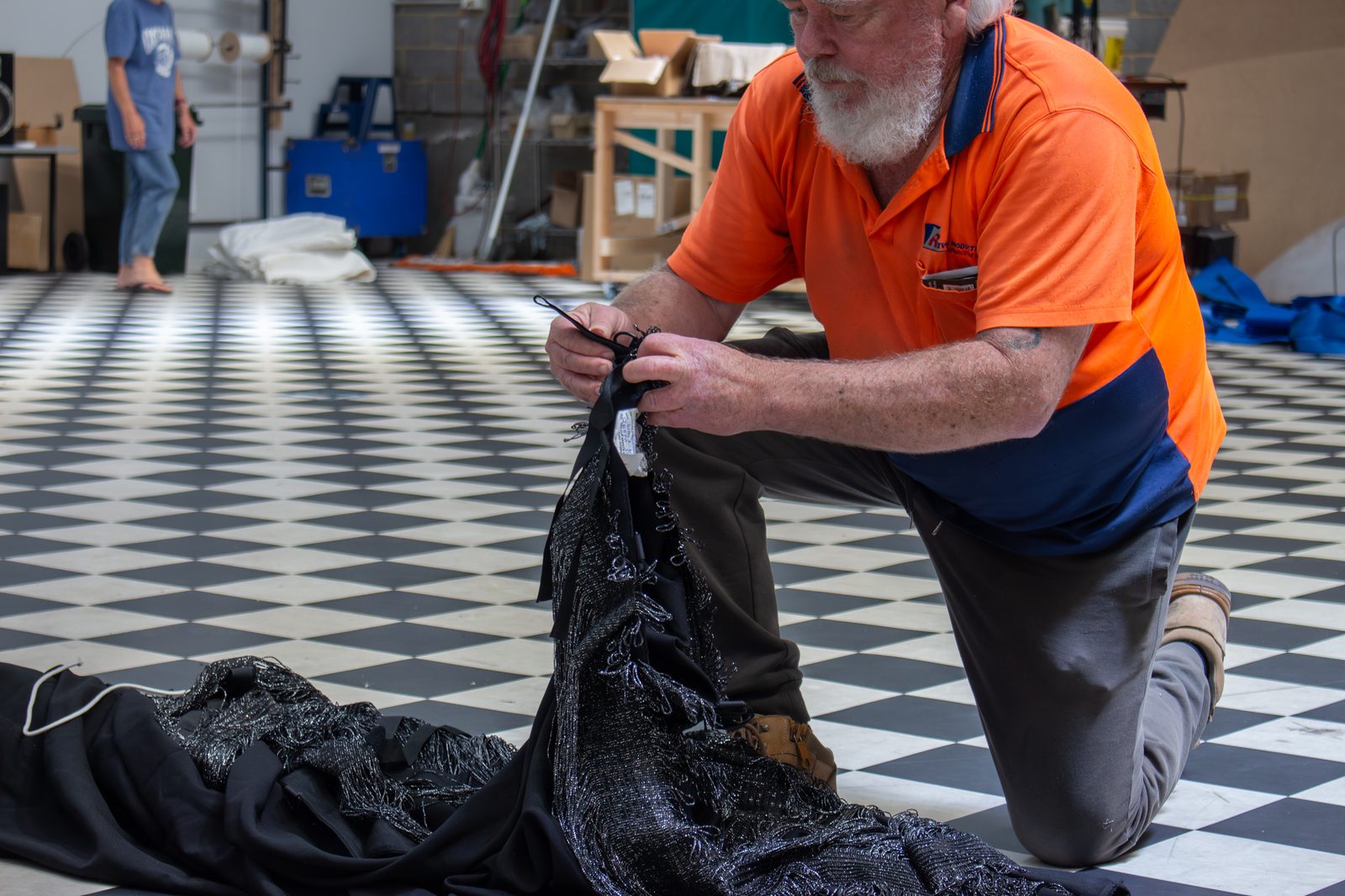
We identify the fabric, its fire rating and its condition. Inherently flame retardant cloth is not treated. Worn or water-marked pieces are flagged first.
-
 02
Clean and prepare
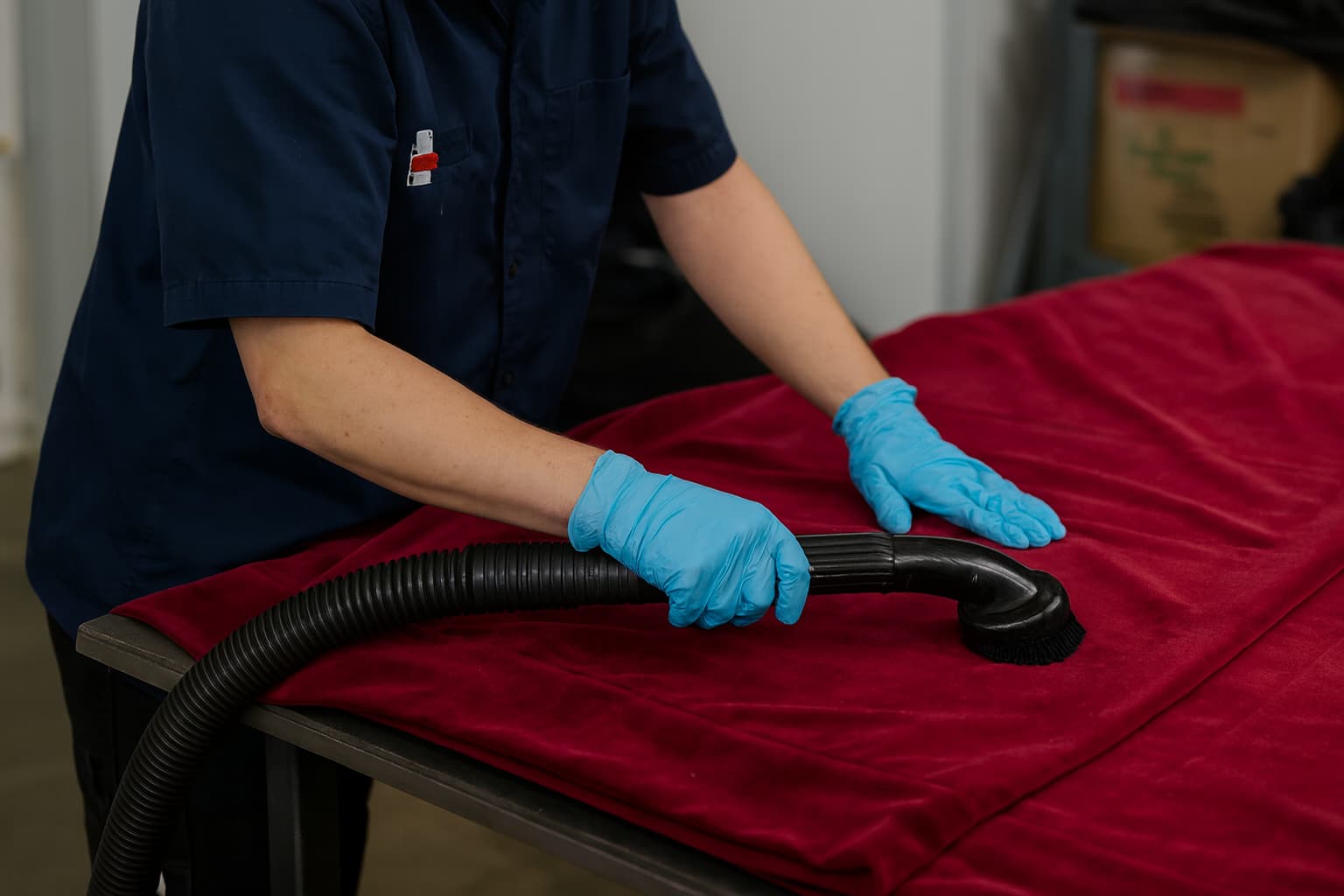
Dust comes out before anything goes on. Left to build up, dust can carry fire even on inherently flame retardant fabric.
-
 03
Apply
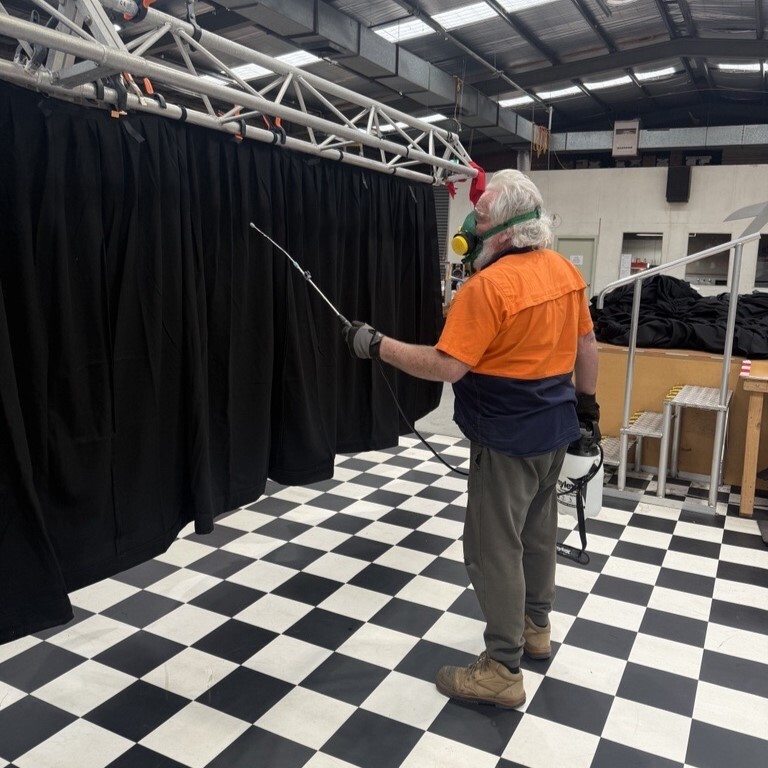
Immersion or spray, chosen to suit the fabric. Treated goods are flame retarded to AS 1530 standards.
-
 04
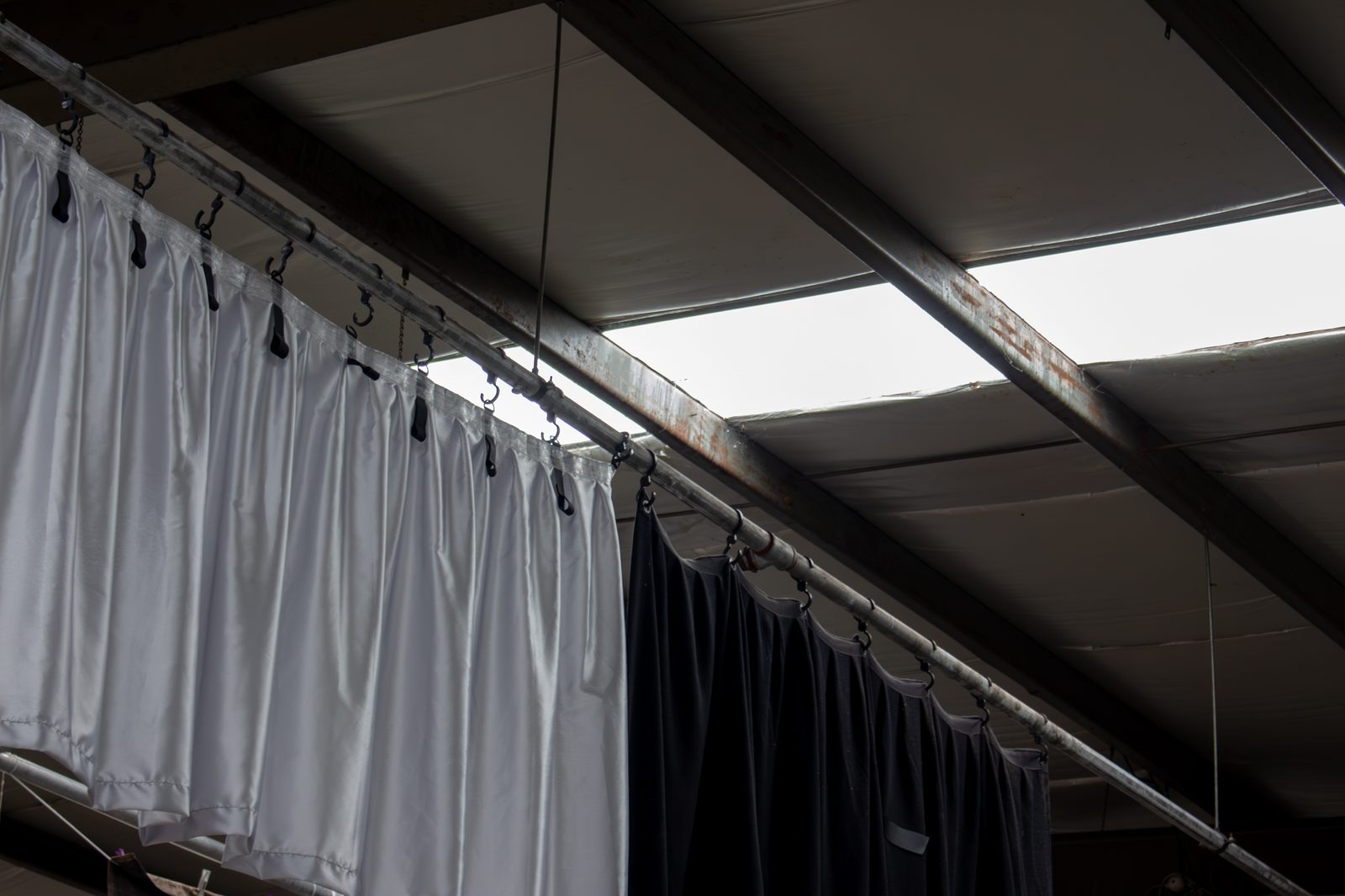
Dry and check
Each piece is dried and quality checked before it goes back.
-
 05
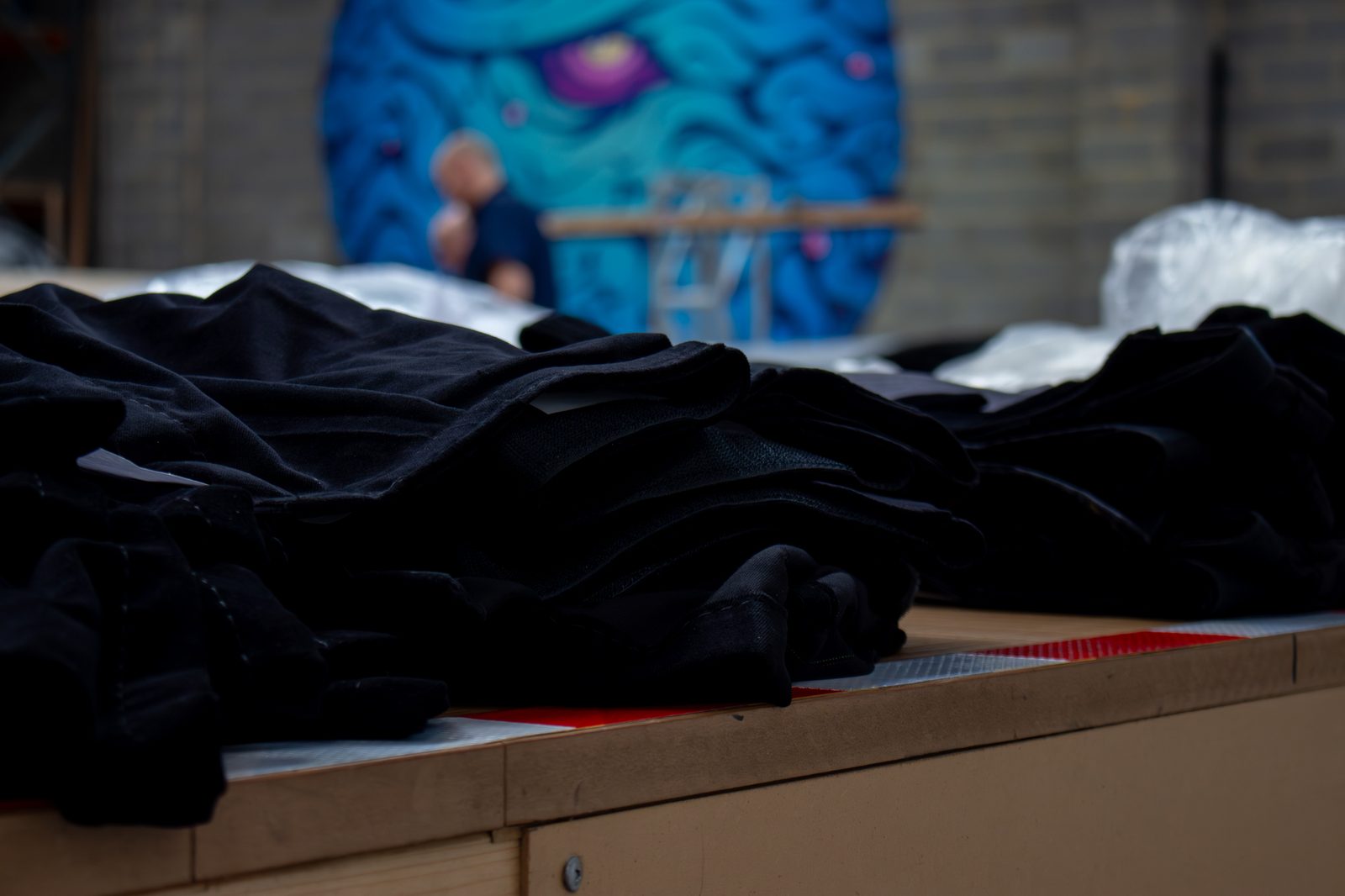
Certificate
Your treatment certificate and aftercare guidance travel back with the drapes.
What you receive
The certificate is the deliverable
5steps
The same process on every job
1certificate
With every treatment job
2 to3years
Usual re-treatment cycle for treated fabric
| Item | Detail |
|---|---|
| What we treat | Drapes, backdrops and soft goods in fabric that is not inherently flame retardant |
| How | Immersion or spray, flame retarded to AS 1530 standards |
| The certificate | States that the treatment was applied by a trained and competent technician |
| You keep on file | The treatment certificate, for insurance and audit, and our aftercare guidance |
| When it is due again | Usually every 2 to 3 years, depending on use, moisture and cleaning. Sooner after any water |
- Buying new? Every cloth on our theatre drapes → page lists its fire rating.
- Scrims and sheers are rated cloth by cloth on the scrims page →
On the floor
The work, and what we look for
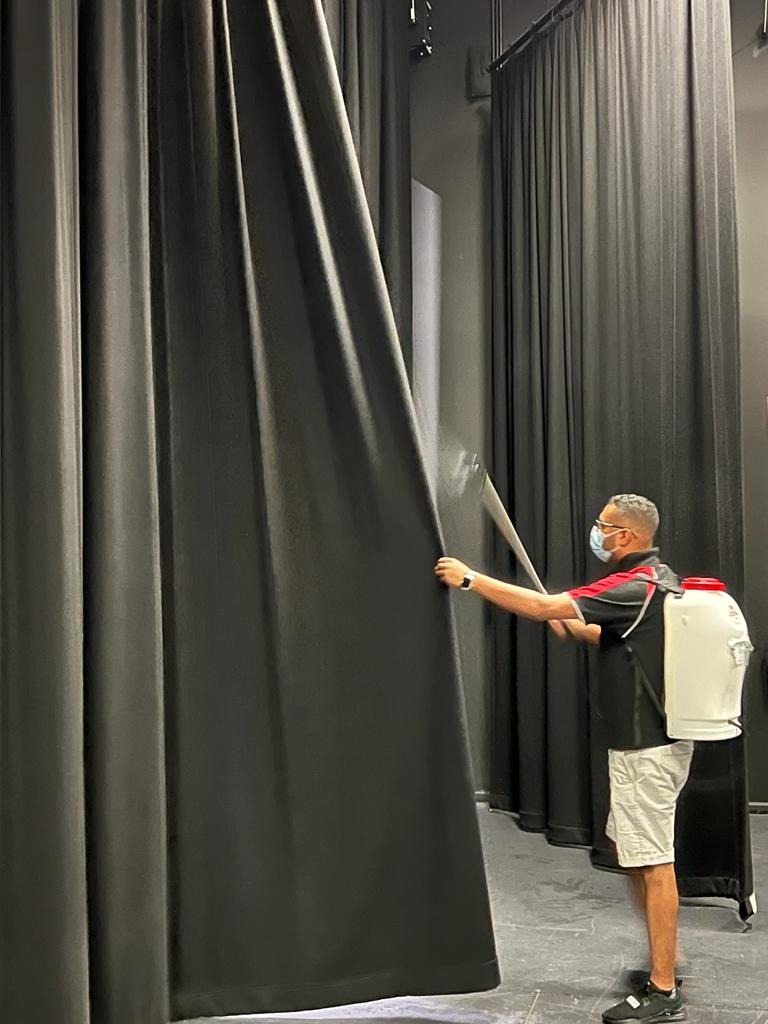
Spraying hung curtains in a venue 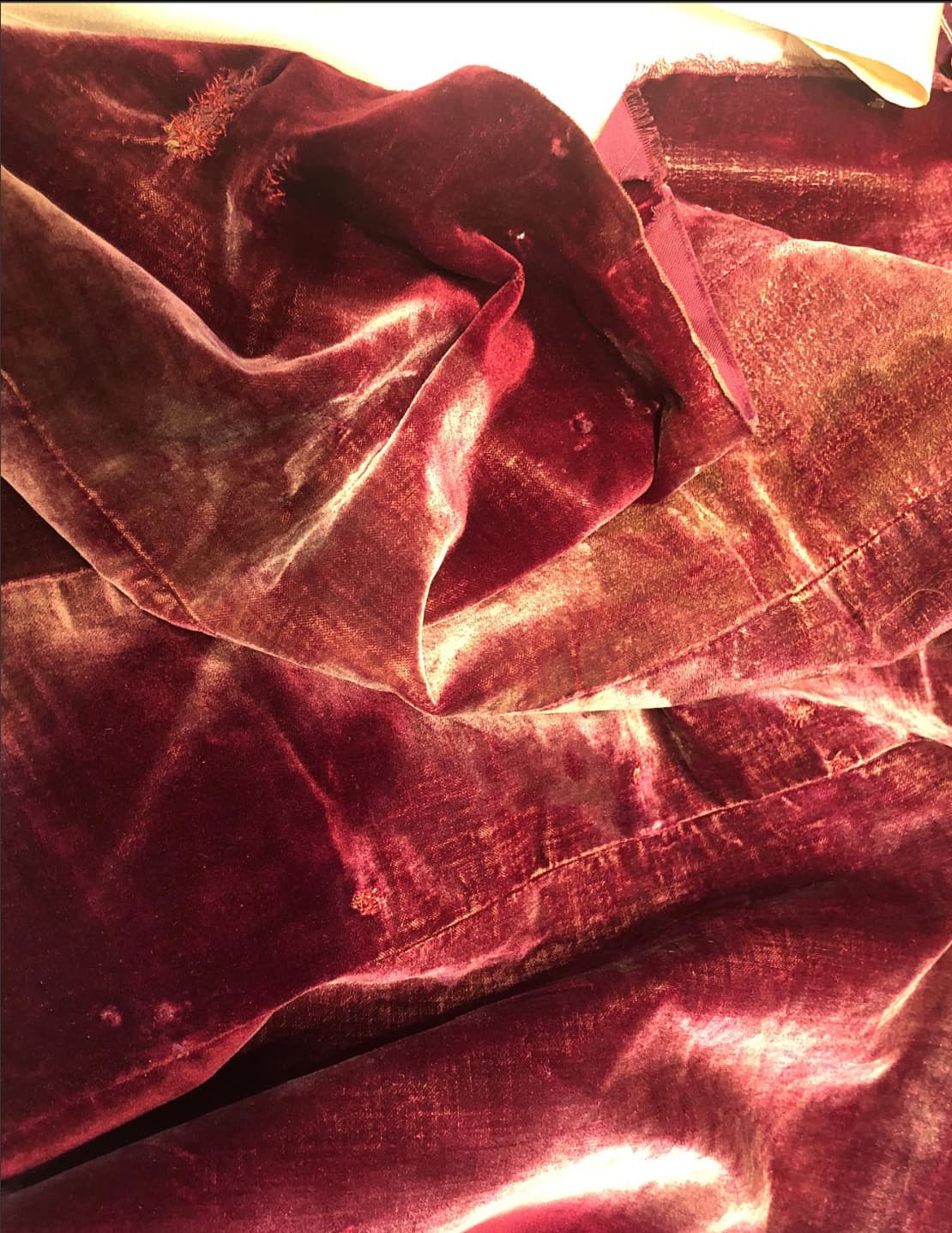
Wear and fading, flagged at evaluation 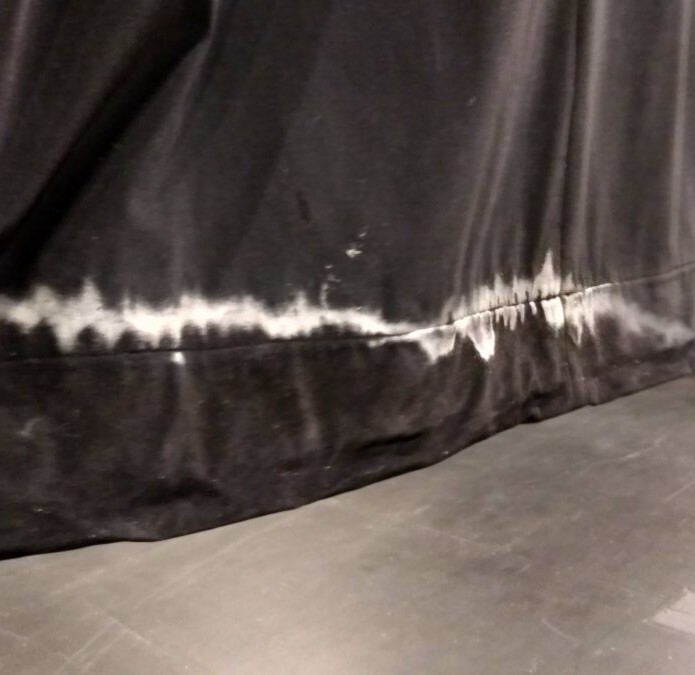
Tide marks: a drape that has been wet 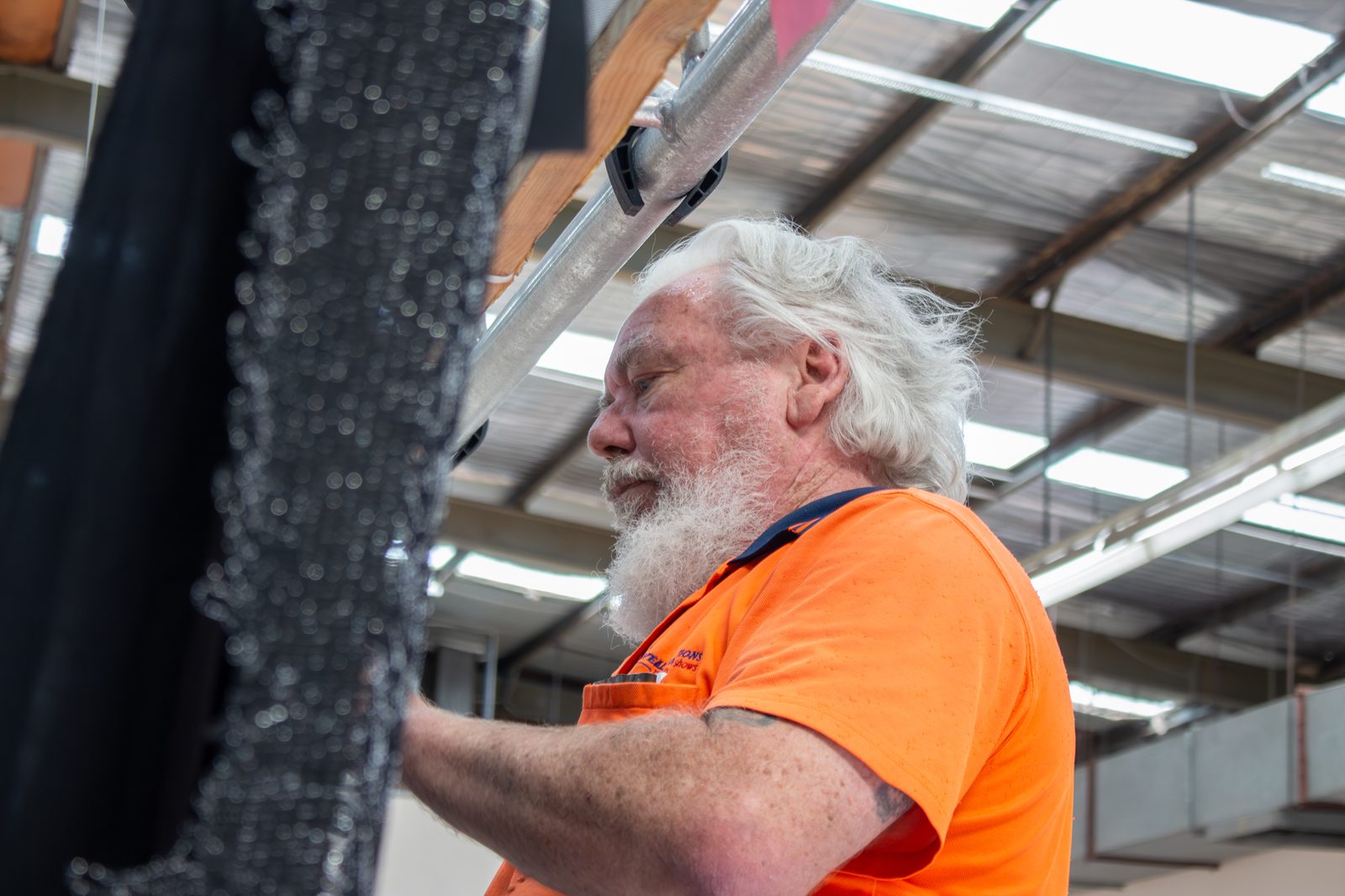
Checking a drape up close
Questions
Fire treatment, answered
Do my drapes need fire treatment?
It depends on the fabric. Inherently flame retardant fabric such as wool serge is not treated. Durably and non-durably treated fabrics need treatment renewed over time, and untreated fabric needs treating before it hangs. Not sure what is hanging? We check first.
What does the treatment certificate state?
That the fire retardant treatment was applied by a trained and competent technician. Keep it with your insurance and audit records, along with the aftercare guidance we supply.
How often should drapes be re-treated?
Usually every 2 to 3 years for treated fabric, depending on how hard the drape works, how it is cleaned and how much moisture it sees. Re-treat sooner after any water.
What should I do if my drapes have been wet?
Take them down and arrange re-treatment before they hang again. Water can strip a surface treatment with no visible sign, though white tide marks along a hem are a common clue.
How is the treatment applied?
By immersion or spray, chosen to suit the fabric. Every job follows the same five steps: evaluate, clean and prepare, apply, dry and check, then the certificate.