The test behind the rating
Fire ratings are not marketing language. Each one traces back to a laboratory test under the AS/NZS 1530 series, and two parts of that series do the work for stage drapes.
AS 1530.2 is the vertical burn test. A fabric sample is ignited and measured for how readily flame takes hold and travels, and the result is expressed as a Flammability Index. In Australia, compliant theatre fabric needs an index of 10 or below. New Zealand sets the bar at 6.
AS 1530.3 measures early fire hazard properties: how easily the material ignites, how far flame spreads across it, and how much heat and smoke it gives off. Where 1530.2 asks whether a fabric will carry flame, 1530.3 describes how it behaves while a fire is developing.
So when a supplier says a drape is flame retardant, there are two questions worth asking before anything hangs: which test sits behind the claim, and what the number was.
IFR, DFR, NDFR: what the letters tell you
The rating on the label answers a different question to the burn test. The test says how the fabric performed; the rating says where that performance comes from, and that is what decides how long it lasts.
| Rating | Stands for | Where the protection lives | How long it lasts | Typical fabrics |
|---|---|---|---|---|
| IFR | Inherently Flame Retardant | Woven into the fibre itself | The life of the fabric. No retreatment. | Wool serge, PolyCyc, sheer voile |
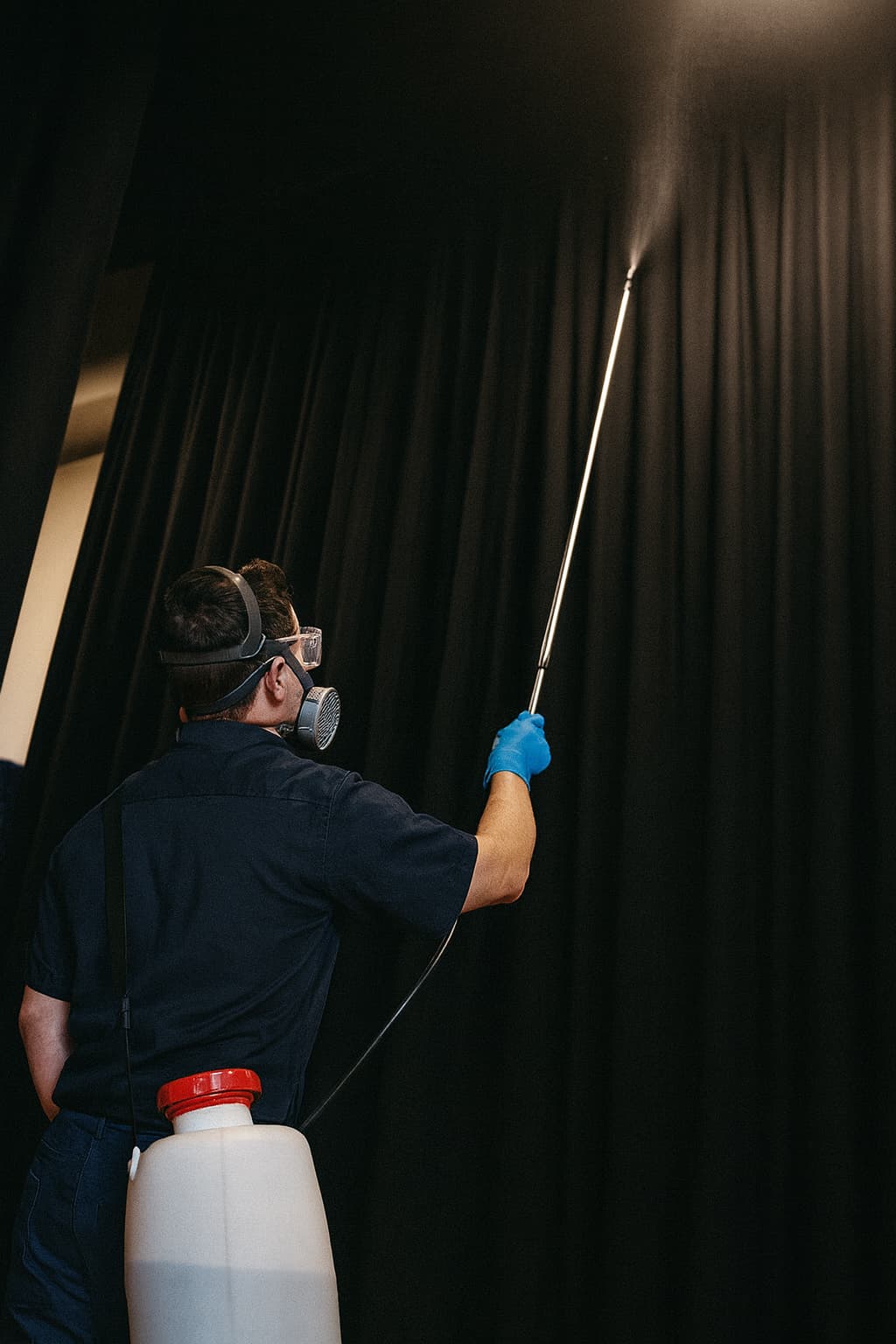
| DFR | Durably Flame Retardant | A chemical treatment engineered to hold through cleaning cycles | Years. Retreat every 2 to 3 to stay certain. | RevPro Blockout |
| NDFR | Non-Durably Flame Retardant | A treatment sitting on the surface of the fabric | Until moisture, washing or wear undoes it. Retreat every 2 to 3 years, sooner with exposure. | Turo molton, sharkstooth gauze, filled cloth |
Two footnotes worth pinning to the noticeboard. Velvets and velours can be either inherently retardant or surface-treated depending on the fibre - the label tells you which, the look of the fabric does not. And a drape with no rating at all is treated as NFR, not flame retardant, until it has been tested or treated. The full breakdown by fabric family, weight and width lives in our fabric library.