

Care and maintenance

How to care for your stage drapes

Cleaning, storage, handling and retreatment - the habits that add years

Stage drapes rarely wear out on their own: dust, damp and handling do it for them. Vacuum them, store them dry, keep the fire retardant treatment current, and a well-made drape serves for decades. This is the routine our machinists recommend, fabric by fabric.

6 minute read · Updated 22 July 2026

The Drape Selector

Spec your drape
before you call.

Answer five quick questions. The Drape Selector matches fabric, fullness and opening style to your space, then turns it into a spec ready to send to the makers.

  • Five questions
  • No email gate
  • Quote-ready spec
The Drape Selector running on a laptop and a phone
Drape Selector
01What is the job?
House curtain
Masking legs
Cyclorama
02Which fabric?
VelvetIFR
Wool sergeIFR
MoltonNDFR
03How full should it hang?
Flat
75%
100%
04How does it open?
Traveller
Guillotine
Tableau
05What size?
FabricWool serge
FR classIFR
Size12.0 x 7.0 m
SpecReady →
Step 1 of 5 · The job

When the curtain shows its age

Drapes do not shout when they are overdue for attention. They show it: colour loss on the stage-facing side, a musty note from damp storage, a stiffening hand, a white tide mark creeping along a hem. By the time any of that reads from the stalls, the fabric has been asking quietly for a while.

None of it means the drape is finished. Most of what a close look turns up is maintenance, not replacement - and the difference between the two is usually how early it was caught. Which is why every habit in this guide starts from the same place: look at your drapes on purpose, before and after they work, not only when something snags.
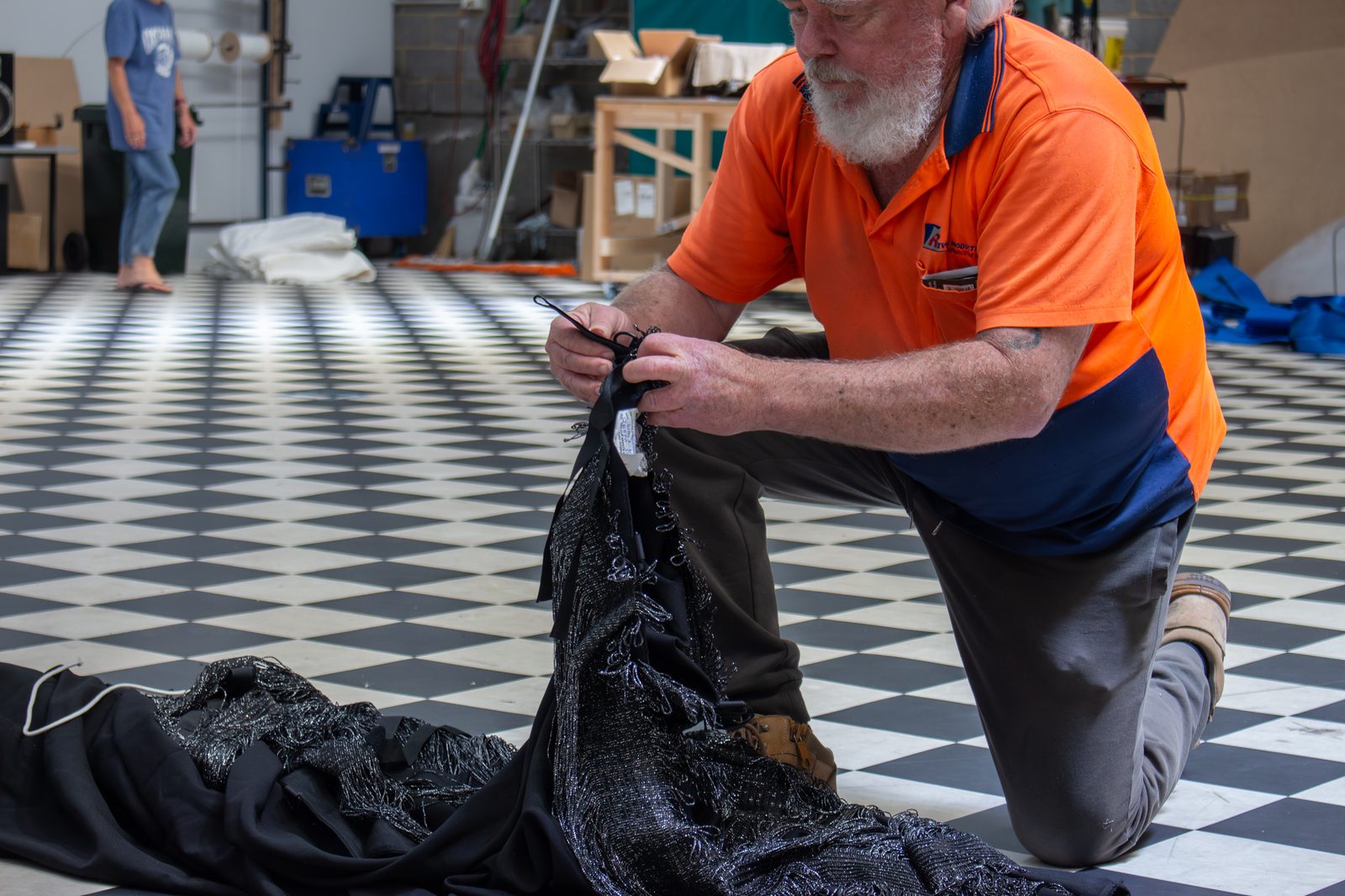
Reveal staff member inspecting a length of black wool serge across the workshop bench
Inspection is the habit that carries the rest. Before and after every use: seams, eyelets, ties and hems, with the date recorded.

Five habits that give a drape a longer life

Care is not a project, it is a rhythm - and none of it needs a technician on site.

  1. Inspect before and after every use. Small tears, loose seams, worn eyelets and ties - find them while they are still small. Note what you find and record the date; at audit time the log is worth as much as the stitching.
  2. Clean little and often. Dust dulls the cloth and can compromise a fire retardant treatment, which makes vacuuming fire prevention rather than housekeeping. Shake drapes off before they go into storage, and dust them down after a run.
  3. Store dry, breathable and labelled. Never fold a drape damp - dry it fully first. Hang or roll rather than compress for long-term storage, use drape bags or breathable covers, label every bag and tub, and keep fabric away from moisture, direct sunlight and shared tubs of metal hardware.
  4. Handle with intent. No tugging, no dragging across floors or sharp edges, no standing on the hem. Teach the crew - and the students - how a drape is walked, folded and hung, and the fabric will repay it.
  5. Book the annual professional check. A yearly maintenance and inspection visit picks up what daily eyes miss, and keeps treatment dates and certificates current.

Care by fabric family

Not all drapes are built the same, and the care splits cleanly into two camps: the piled and woven wools and velvets, and the lighter cottons and gauzes.

Fabric familyCleaningHandling
Wool serge, velvet, velour, velveteen, turo moltonDry clean only - a wet wash can shrink these cloths by up to 3%. Remove hooks, rings and trims before cleaning.Regular vacuuming or brushing maintains the pile and the look.
Filled cloth, sharkstooth scrim, canvas, calicoReapply flame retardant after painting, dyeing or any wet cleaning.Gentle under tension - these cloths tear at sharp edges and over-tight rigging.

If you are not sure which camp a drape falls into, the label usually knows - and our fabric library covers every family we sew, with weights, widths and fire classes inline.
The one rule that outranks the rest

A wet drape is not a compliant drape.

Most stage fabrics carry their fire protection as a treatment rather than in the fibre, and a surface treatment does not survive water. Rained on in transit, wet-washed, stored damp - once moisture has been through the cloth, the flame resistance can go with it, and what is hanging is no longer what the certificate describes.

The response is procedural, not dramatic. Dry every drape fully before it is folded. Keep wet cleaning away from treated fabric. Check FR tags and treatment dates as part of the inspection habit, plan on retreatment every 2 to 3 years, and if a treated drape has been wet, retreat it before it hangs again. Our fire ratings explainer covers which fabrics hold their rating for life and which need the diary date.

When it is time to replace - and when it is not

There is no set expiry date on a stage drape. How long one lasts comes down to how hard it works, how it is stored and how it has been maintained - so the answer is a set of warning signs rather than a birthday:

  • Frayed seams or torn panels.
  • Discolouration or fading, showing first on the stage-facing side.
  • Sagging pleats, or fullness that has dropped out of the drape.
  • Moisture staining, or a salt tide mark along the hem.
  • A failed fire compliance test.
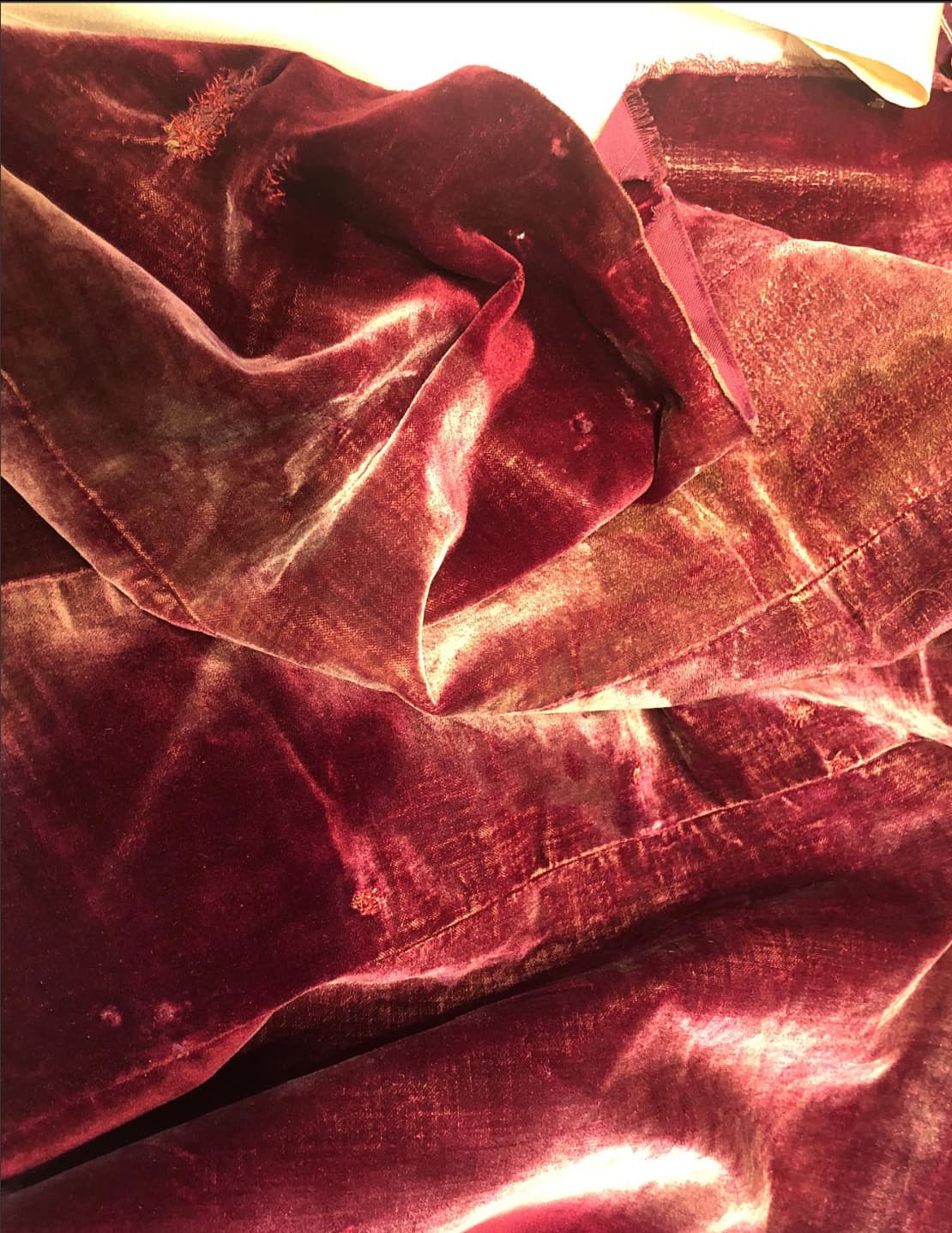
Stage velvet showing uneven colour loss and fading across the pile
Uneven fade across a velvet pile. Colour loss shows first on the stage-facing side - compare it against the back of the cloth.

Read the list again before pricing a replacement, because most of it is recoverable. Frayed seams are resewn, tired treatments are reapplied and re-certified, and a drape that fails a compliance test can usually be treated back into its paperwork rather than sent to the skip. Our workshop repairs, retreats and re-certifies drapes for exactly this reason - and when a drape truly is at the end of its stage life, we will say so plainly and spec its successor.

How fire treatment works →

Cared for by the people who make them

Everything above is the routine we run on our own floor. The drapes we cut and sew leave the Preston workshop meeting Australian standards, and the care does not end at handover: cleaning, repair, retreatment and certification all happen under the same roof as the sewing machines that made them.

Not sure what fabric you are looking at? Send us a photo of the drape and its tag and we will identify the cloth, its rating and the care it needs. We have been making and maintaining stage drapes since 2001 - and we look after plenty that came off someone else's bench.

Keep the routine on the wall

Fabric families, weights, widths and fire ratings for everything we make - the reference the care habits hang off.

Download the drapes catalogue →