Velvet vs wool vs molton: how to choose the right fabric
Not all curtains are created equal - and they don't have to be complicated
Three fabrics do most of the work on Australian stages. Velvet is the front-of-house showpiece, wool serge is the inherently flame retardant workhorse behind it, and Turo molton covers the most stage for the least spend. The right one is decided by the job, not the look - here is how to call it.
6 minute read · Updated 22 July 2026
02
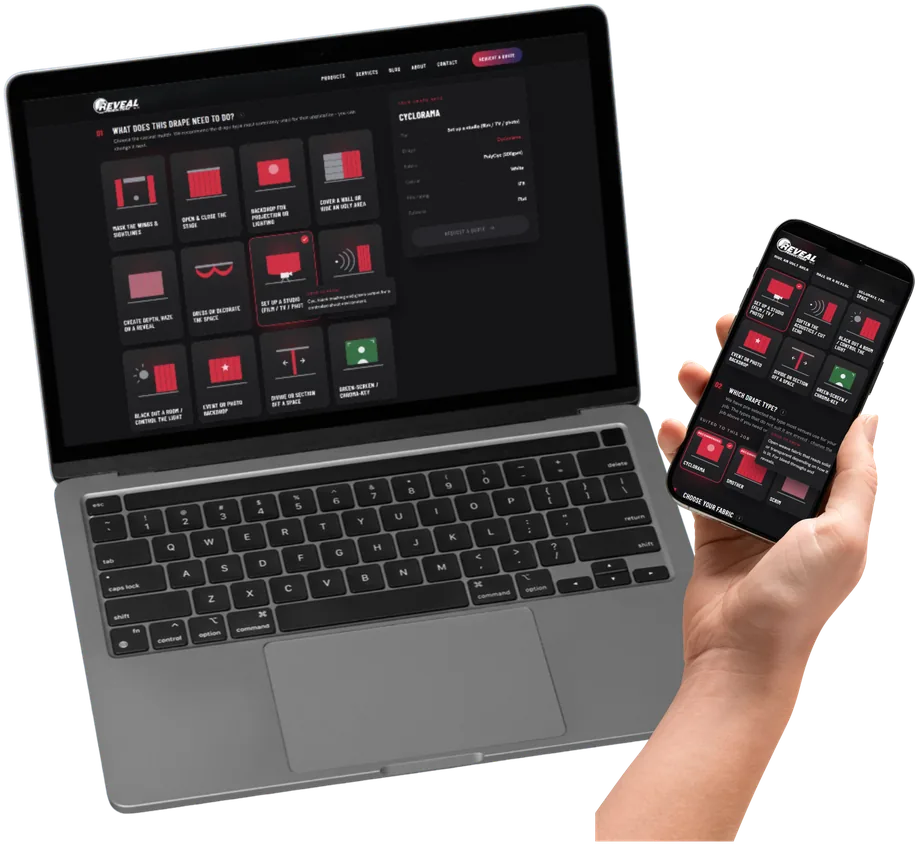
The Drape Selector
Spec your drape before you call.
Answer five quick questions. The Drape Selector matches fabric, fullness and opening style to your space, then turns it into a spec ready to send to the makers.
Sourcing stage drapes gets complicated quickly. Some fabrics look right under light but will not block it. Others are fire safe but hang flat and lifeless onstage. And the names blur together: velvet, velour, serge, molton. This is the comparison we walk buyers through most weeks, for the three fabrics that do most of the work on most stages.
The specs first, because the specs decide it:
Fabric
Weight
Width
FR class
Colours
Reach for it when
Velvet / velour
~450gsm
1.2-1.5m
IFR or NDFR, by fibre type
Wide range
House curtains, valances, swags
Wool serge
~550gsm
1.8m
IFR - inherent, for life
Black, red, blue, grey
Legs, borders, masking, travellers, smothers
Turo molton
~320gsm
3.0m
NDFR - retreat over time
Black or white
Smothers, stage skirts, perimeter drapes
Those are our Quick Fabric Finder values. The full range - cycloramas, gauzes, blockouts and the rest - lives in the fabric library, with weight, width and fire rating inline for every family.
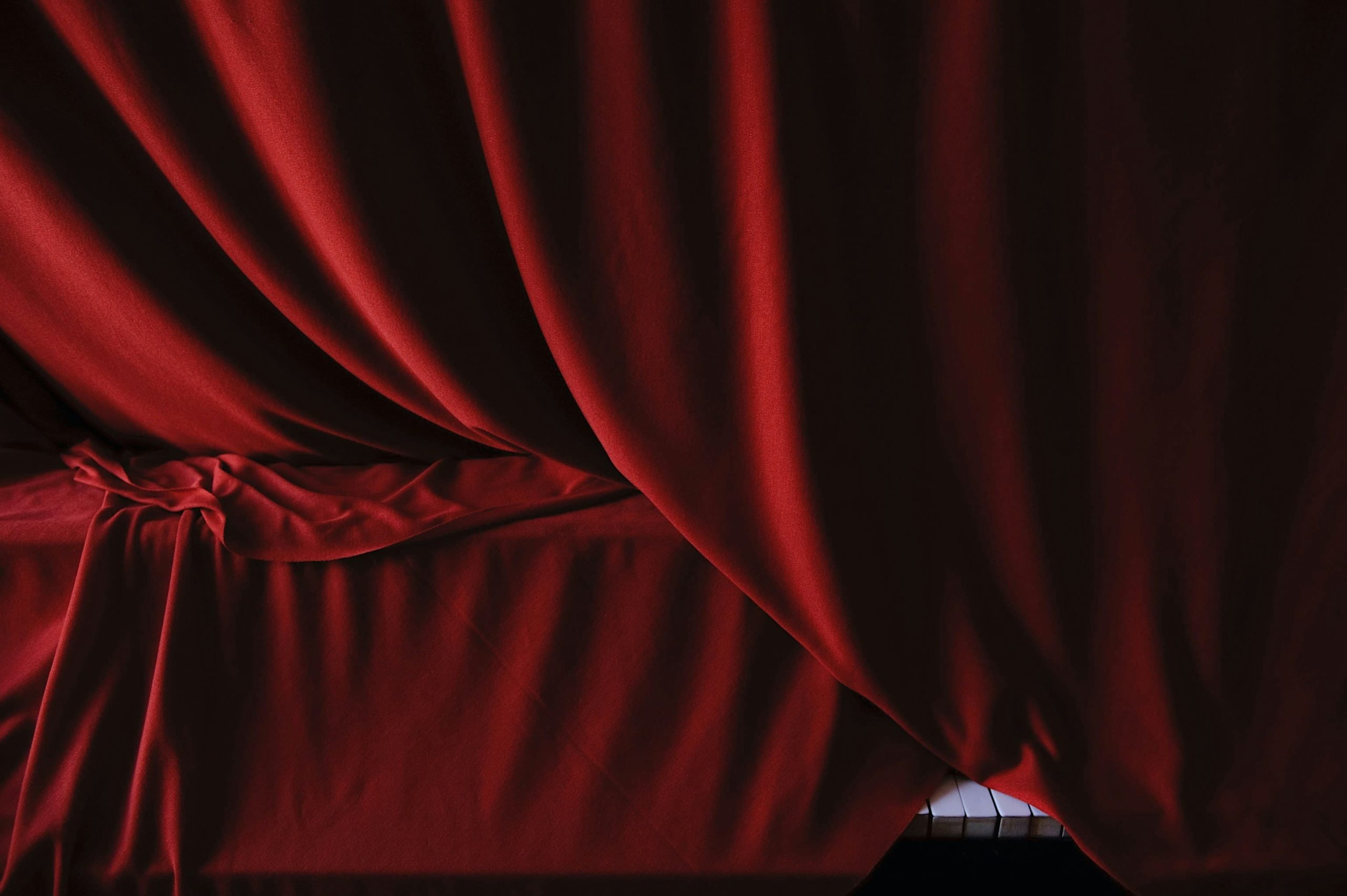
Velvet doing what velvet does: deep colour, deep folds, and a sense of occasion before anything has happened onstage.
Velvet: the showstopper
Velvet - velour, as the fibre changes - is the classic theatre curtain for a reason. The dense cut pile drinks stage light and gives back deep, saturated colour, and at ~450gsm it moves with a weight that reads as occasion from the back row.
Bold stage presence. The pick for front-of-house curtains, valances and decorative swags - anywhere the audience looks first.
Quietens the room. The pile softens harsh reflections and tames echo in larger venues.
IFR or NDFR, depending on the fibre. Some velvets are inherently flame retardant for the life of the fabric; others carry a surface treatment that needs renewing. The certificate tells you which - the look of the pile does not. Our explainer on what fire ratings actually mean decodes the difference.
A wide colour range across 1.2-1.5m goods, from house reds and golds to blacks and blues.
Care: dry clean only. Velvet can shrink if it takes on moisture, so keep it away from water and DIY washing.
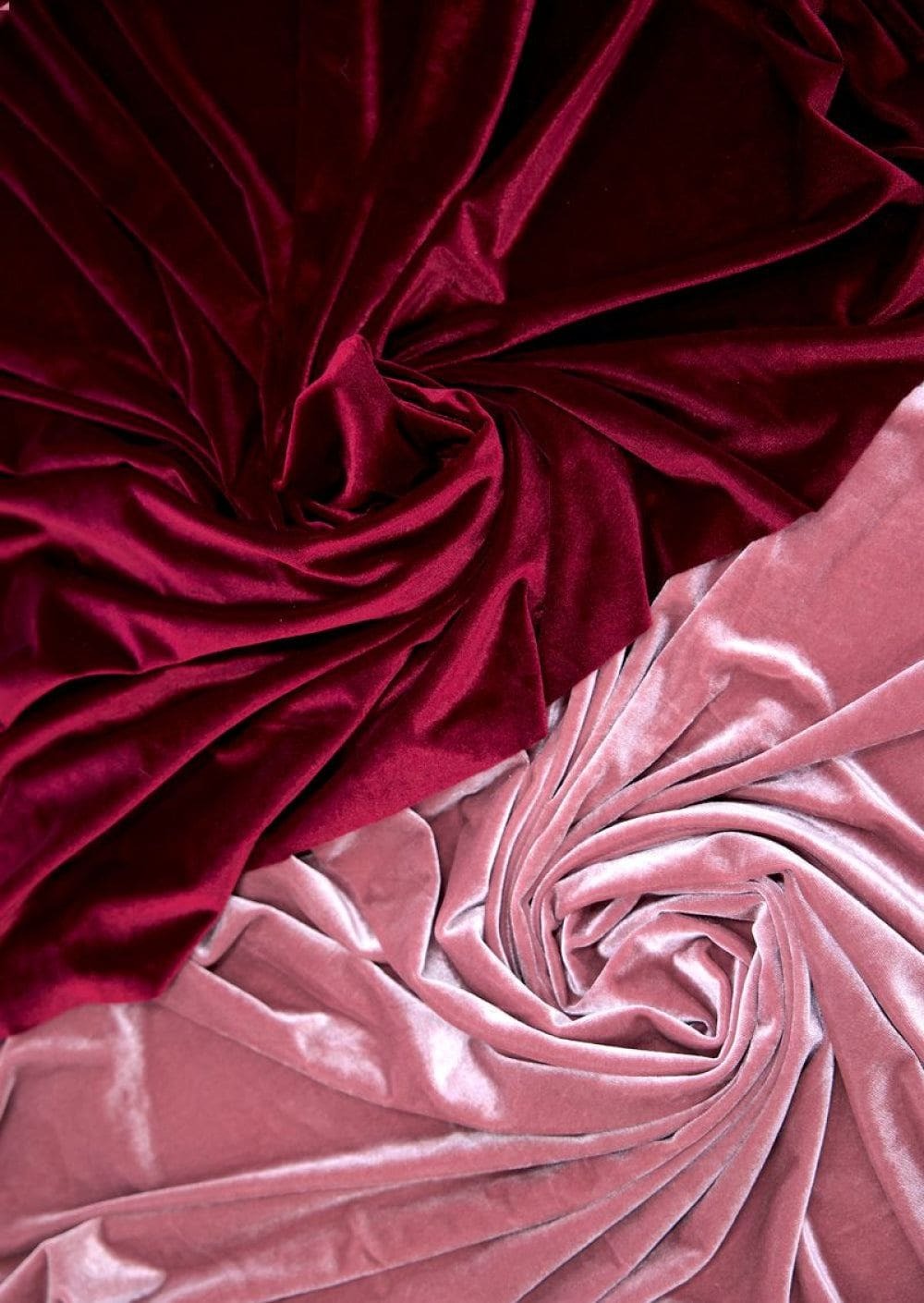
The pile is the point: it is what turns flat colour into depth once the light hits.
Wool serge: the backstage workhorse
If velvet is the fabric the audience sees, wool serge is the one doing the shift work around it. A dense ~550gsm weave with a soft matte face, it is the masking standard because its job is to make everything near it disappear.
Kills reflections. Low-shine matte finish, so there are no hot spots under stage light.
Absorbs sound. The acoustic performer of the range - one reason it lines so many drama spaces and multi-purpose halls.
Inherently flame retardant. The FR is woven into the fibre. No treatment, no retreatment, ever.
Built for handling. Stands up to regular movement, re-rigging and touring life.
Cut from 1.8m goods in black, red, blue and grey, serge is the default for legs, borders, travellers and smothers. Care: keep it dry and vacuum it regularly. Wet cleaning can shrink wool by around 3 per cent - on a six-metre leg, that is a drop you will notice.
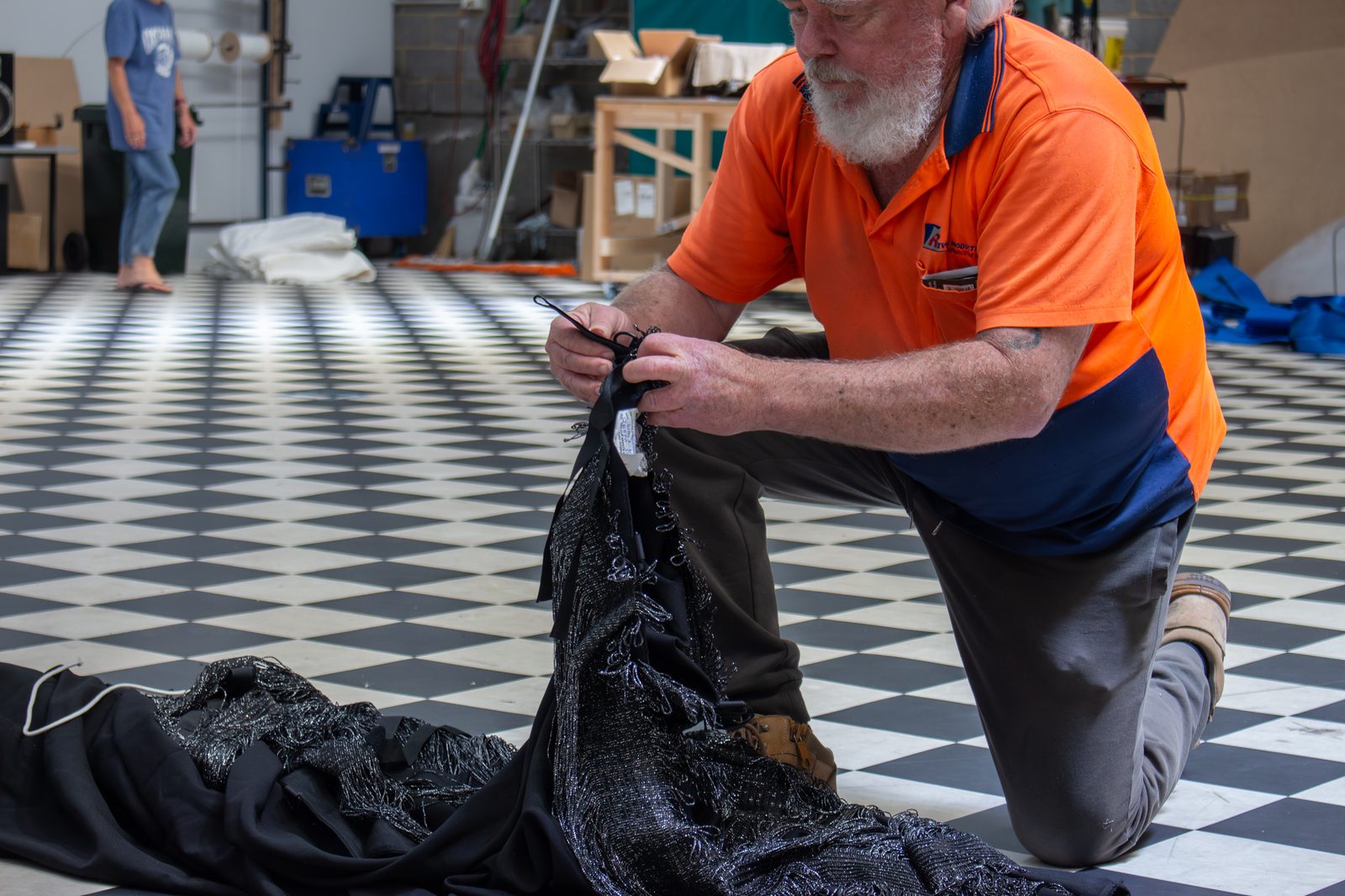
Serge on the bench. Masking earns its keep by being handled, so it gets checked like the working tool it is.
Turo molton: the flexible friend
Turo molton is our upgraded take on classic molton: a brushed-cotton cloth that covers a lot of stage without a heavyweight spec. At ~320gsm it is the lightest of the three, and the 3.0m roll width means fewer seams and faster installs.
Strong light blocking for a mid-weight cloth - more coverage per kilogram than anything else here.
The value pick. The cost-conscious choice for schools, tours and short-term installs.
NDFR. The flame retardant treatment sits on the surface of the fabric, so it needs renewing over time - and straight away after any wash or soaking.
3.0m wide. Wide goods in black or white, so a full perimeter goes up with fewer joins.
Best for black box theatres, photography studios, perimeter drapes, stage skirts and anywhere that needs honest coverage fast. Care: keep it dry - if molton gets wet, the treatment leaves with the water, and the drape must be retreated before it hangs again.
White molton off the 3.0m roll: wide goods, fewer seams, quick coverage.
The rule all three share
Water undoes every stage fabric.
Velvet shrinks. Wool serge shrinks by around 3 per cent. Molton keeps its shape but loses the thing that matters most: its fire retardant treatment. Every fabric in this comparison is dry clean only, and any treated drape that has been rained on, washed or stored damp needs retreating before it works another show.
None of that should put you off - it is a care routine, not a flaw. Vacuum regularly, keep the drapes dry, and book a maintenance and inspection visit after a hard season. The rating stays current and the drapes stay working.
How to choose in three moves
Start with the job, not the look. Audience-facing and decorative: velvet. Masking, legs and borders: wool serge. Wide coverage at a cost-conscious spec: molton. Most venues need a mix, not a winner.
Check the FR class against your compliance file. Wool serge is IFR for life. Molton is NDFR and retreats every 2 to 3 years. Velvet can be either - the certificate for the finished drape settles it.
Confirm width and weight against the space. 1.8m serge seams differently to 3.0m molton, and a ~550gsm cloth hangs and travels differently to a ~320gsm one. The Drape Selector works through all of it in five questions and hands you a quote-ready spec.
All three fabrics are cut and sewn to measure in our Preston workshop, and every finished drape leaves with its certification. Not sure what is hanging in your venue now? Send us a photo or a swatch - the team identifies the fabric and its FR status, then recommends the next step, whether that is a retreat, a repair or nothing at all.